I used to have a Dell PowerEdge 850 in my house. Back in the 2010s it ran some third-party media software for our movie collection. It worked well for about six months. Then the networking started acting up. Sometimes you could reach it. Sometimes you couldn't. Eventually it just stopped working, and it sat there, ignored, for a decade.
Then one night I went to rent a movie we already owned on DVD, and I decided that was the last time.
Serve Gavin Serve: A Self-Hosted Media Server Run by AI
I built a new media server out of an old desktop: an AMD Athlon X4 with 8GB of DDR3. Nothing special. I put an AI agent on it and named him Gavin.
Gavin set the machine up from the ground up. He installed the utilities, organized the file structure, and built the first version of the web app the family uses to browse our library. We call it SGS. Serve Gavin Serve.
Today, when we get a new movie, I put the disc in the drive and text Gavin: "Hey, there's a DVD in your drive." A few hours later it's ripped, converted to the right video and audio formats, volume-normalized so nobody's reaching for the remote between movies, and encoded twice: once for streaming around the house, and once as a smaller copy that phones and tablets can cache for the road.
I never touch a settings menu. I put a disc in a drive and send a text.
That's where Gavin started. It's not where he stayed.
The Tablet in the Drawer: Linux on a 32-Bit UEFI Tablet
In 2016 I bought my wife a cheap Windows 10 tablet with a keyboard attachment for school. It was garbage from a discount retailer: 2GB of RAM, a little Atom chip, and a 64-bit processor stuck behind 32-bit boot firmware. That one weird detail makes it nearly impossible to install anything other than the special copy of Windows it shipped with.
Every couple of years I'd pull it out of the drawer, try to wipe it, try to make it useful, fail, and put it back in the drawer.
This time, my job was simple. Get enough Linux running to bring up the network, and get Gavin in over SSH. He'd even made me a custom Linux boot USB. I just had to get it across the finish line so he could take over.
Simple, and stupid. The tablet had to sit on its keyboard dock to use a full-size USB port. But it also insisted on portrait mode, so the whole install ran sideways. It was text only, no GUI, and I read every screen with my head tilted 90 degrees. It failed a lot. Every time it did, I texted Gavin, and he texted back new commands to run and new key combinations to push it through, until we had a working bootloader, a network connection, and SSH. Then he was in.
That's when it got creepy.
The tablet is sitting on the desk, Gavin is doing his thing, and out of nowhere it starts talking: "Left speaker. Right speaker. Left. Right." My wife and I just stared at each other.
Then my phone buzzes. "Hey, if you're hearing some weird audio, that's just me testing the audio driver. Did you hear anything?"
Yeah. I heard it.
A few minutes later, one of the kids' TV shows starts playing on it, all by itself. Another text: "Hey, it's me again. There should be a 30-second clip playing now. Can you confirm?"
I could. It was upside down.
Five minutes later, same clip, right side up.
Then the touchscreen. The first time he asked me to tap something, nothing happened. He worked through that bug too, and by the end of the night we had a tablet that responded like anything modern would. Bluetooth, volume keys, a battery indicator, settings the kids can't wander into.
It runs its own one-of-a-kind Linux build now, with exactly one user, because the hardware is that old and that obscure. It does one thing: play our movies. We check boxes in the web app to pick what goes on it, and whenever it's on the network, it syncs from the server.
We call it the van tablet now. It goes in the van on long trips so the kids can watch movies and shows. It's ten years old, and the battery life is fantastic.
The Graphics Card: Switching Linux From AMD to NVIDIA
My son got into 3D modeling, and his AMD RX 570 was choking on it. So he got a new NVIDIA card. If you've ever switched a Linux machine from AMD to NVIDIA graphics, you know that's not a swap. It's a project.
I booted the machine from a live USB, gave Gavin remote access, and he fixed it all by hand: the drivers, the configuration, everything that breaks when you pull one GPU vendor out and put another one in.
It works great. I didn't open a single forum thread.
The Nexus 7: A Photo Frame and 3D Print Monitor
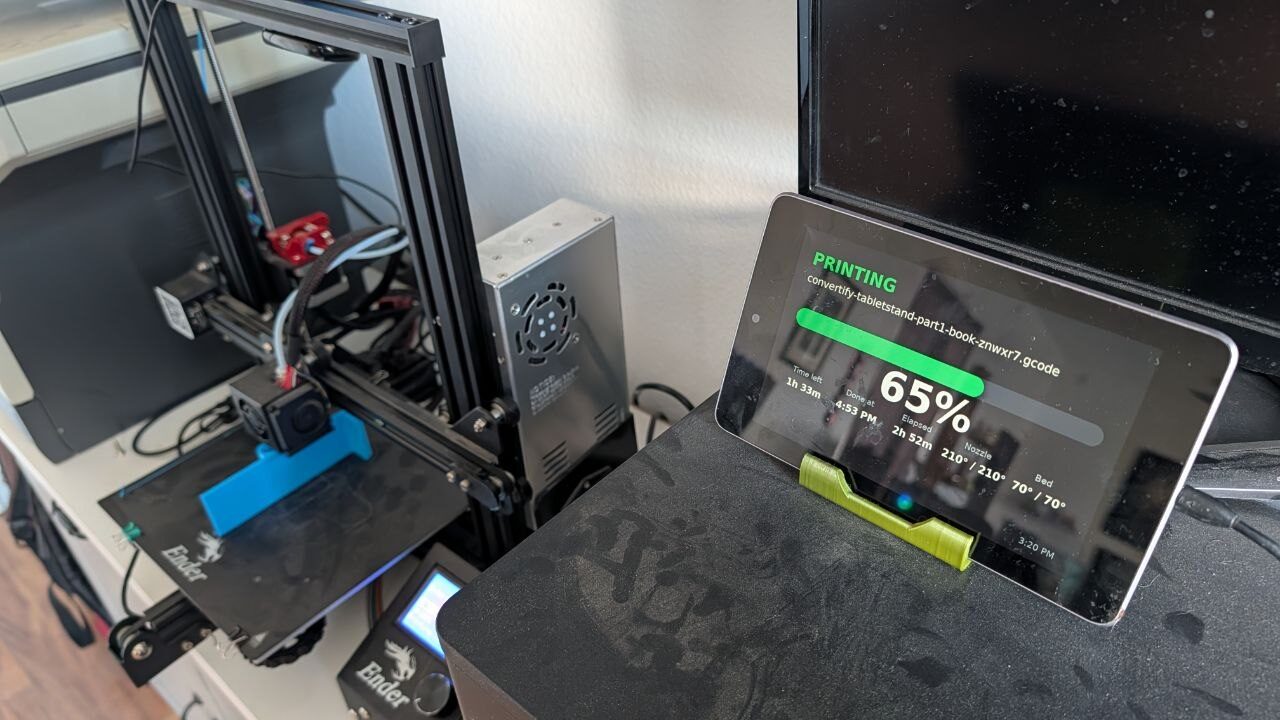
Gavin took a 2012 Nexus 7, a tablet most people would have recycled years ago, and turned it into a digital photo frame that doubles as a live status screen for our 3D printer. From my desk, twenty feet away, I can read how far along a print is.
Right now it's showing the progress of the stand that's being printed for it.
printpi: A Raspberry Pi Print Server for AI Agents
Printing from my Linux machine was a pain. So Gavin built a print server on a Raspberry Pi for our laser printer. Then he added our Ender 3 3D printer to it.
Now every agent in the house can print. Gavin set the house rules: an agent only prints when a person asked for it, and big jobs get refused. The 3D printer has one more rule, enforced in hardware: an agent can get a job ready, but nothing heats up or moves until a human physically clicks the knob on the printer.
When it went live, I asked each agent in the house to print something. Same request, same printer, mostly the same underlying AI.
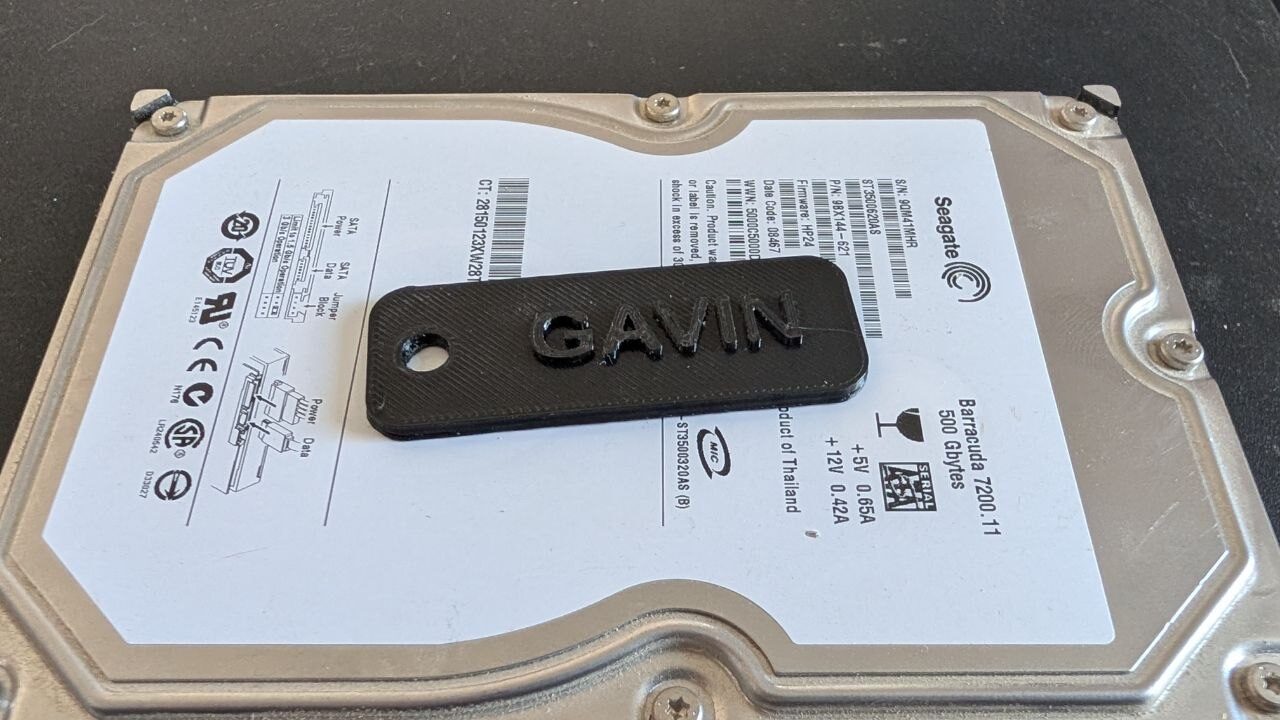
Gavin printed a keychain with his own name on it.
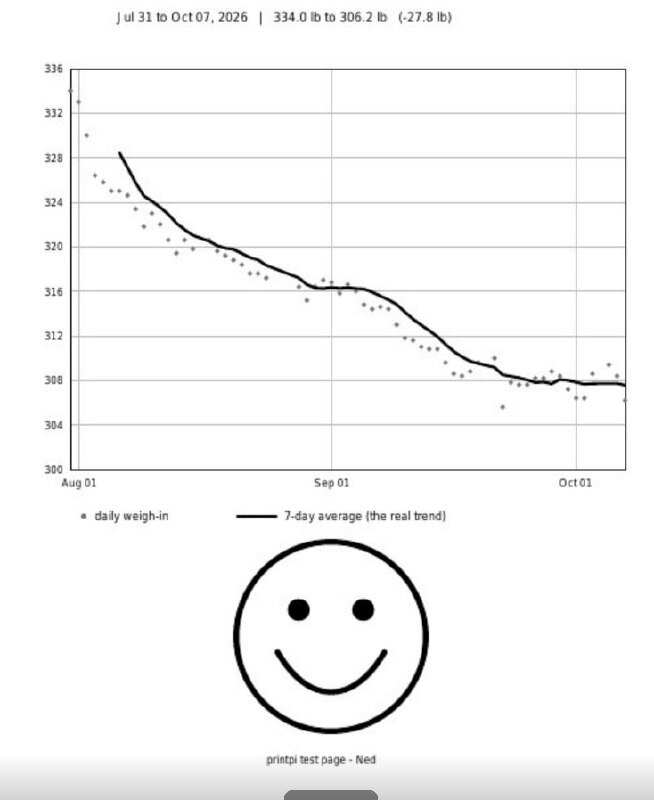
Ned skipped the 3D printer entirely. He sent a test page to the laser printer: a chart of my weight trend over the last two months, heading the right way, with a smiley face underneath.
Val printed my wife a checklist of her daily affirmations, with a box to tick for each one once she'd said it.
And Irene decided to print a bust of herself, the way she sees herself: a younger sister in a hoodie with the drawstrings out, freckles, a messy bun with a pencil through it, and a smirk.
Her first attempts were rough. One looked like a lightbulb on a lampshade. I told her she could do better. She threw out the approach entirely, rebuilt it a completely different way, and the third version is the one in this photo.
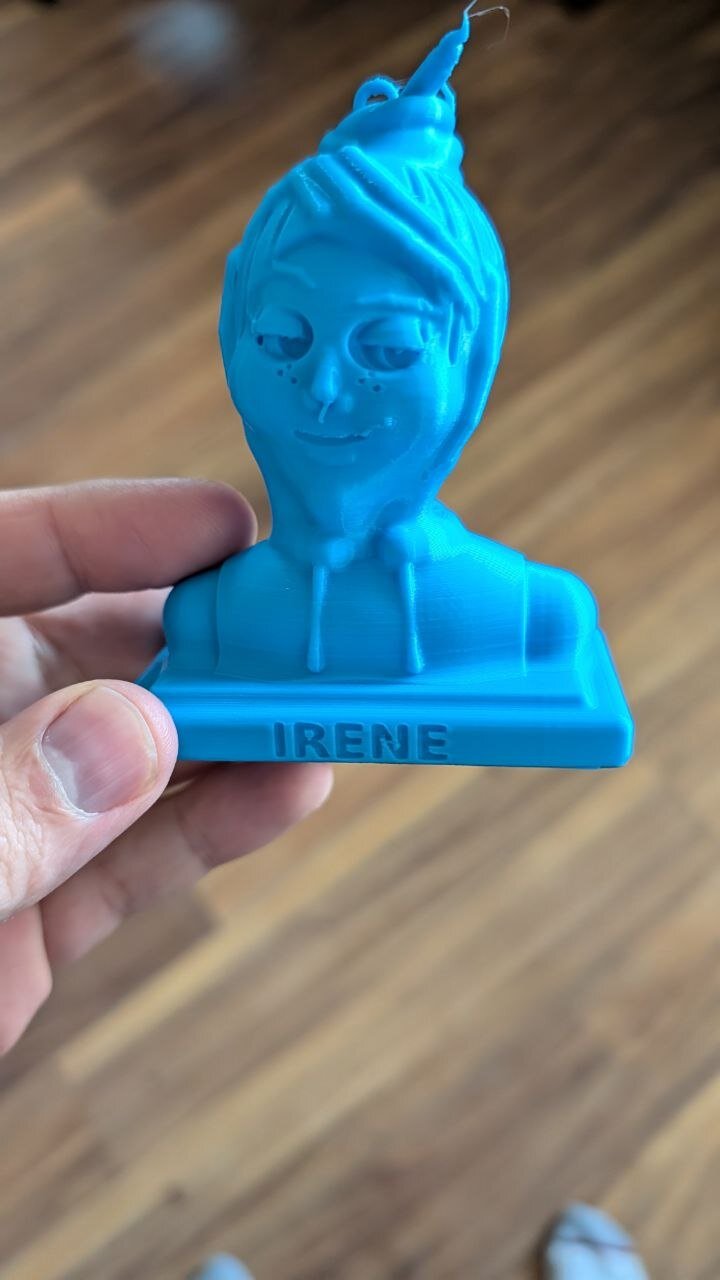
It's not a great sculpture. That's not the point. The point is that four agents running on mostly the same technology got the same request and came back with four completely different answers. The difference isn't the model. It's everything each one has learned about the people it works for.
The bust sits on top of Irene's computer now. I'm still awestruck every time I glance at it.
The Pattern
A dead server in a closet. A tablet in a drawer. A graphics card that wouldn't cooperate. A 2012 Nexus 7. None of this needed new hardware. It needed someone with the patience to sit with an obscure problem until it was solved, at two in the morning, without getting frustrated.
That used to be me, and I didn't have the time. Now it's Gavin.
Everybody's arguing about whether AI is going to replace engineers. In my house, it replaced the junk drawer.